South End
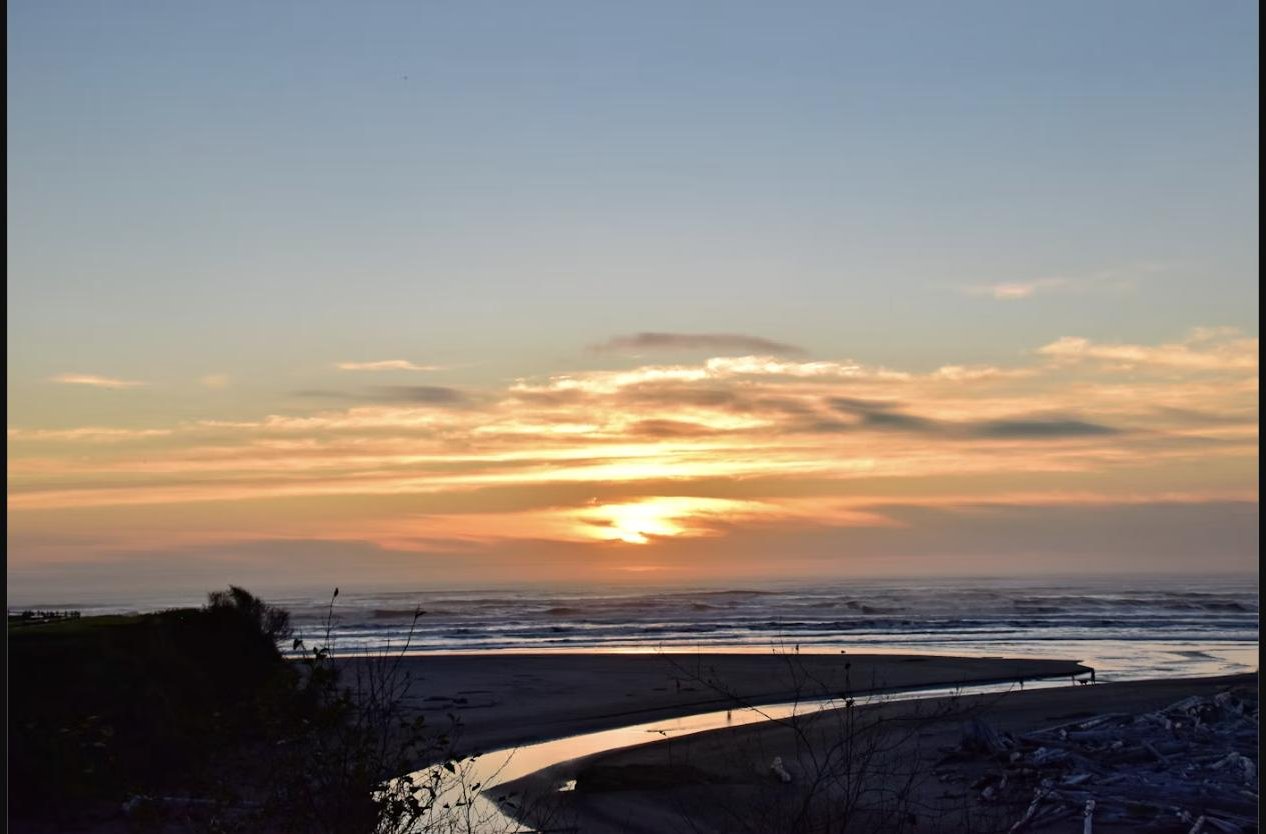
Kalaloch
Kalaloch (pronounced CLAY-lock) is the southernmost section of the park's coastal strip and the easiest to reach. Numbered beach pullouts (Beach 1 through Beach 6) run off US-101, each with its own character; Beach 4 is the go-to for tide pooling at low tide. Kalaloch Lodge sits right on the bluff, and Kalaloch Campground is one of the most popular in the park. Look for the famous "Tree of Life," a cedar suspended over an eroded bank by not much more than its own roots.
Most Photographed
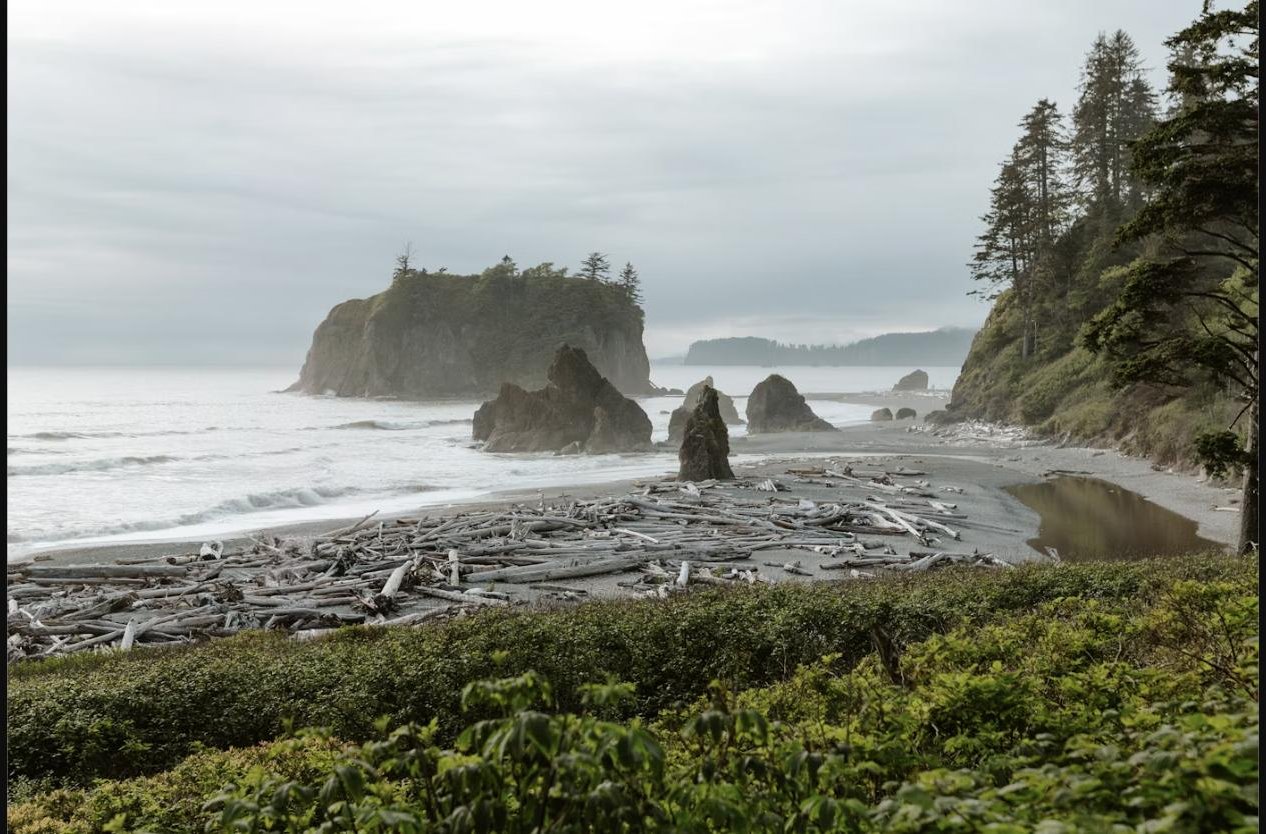
Ruby Beach
Ruby Beach is the single most photographed beach on this coast, and it earns it: a short, steep trail drops you onto a driftwood-strewn beach facing a cluster of dramatic sea stacks, with sand that carries a faint reddish tint from garnet flecks (hence the name). It gets busy in summer; arrive early or late in the day for parking and for the light.
Inland, via Upper Hoh Road
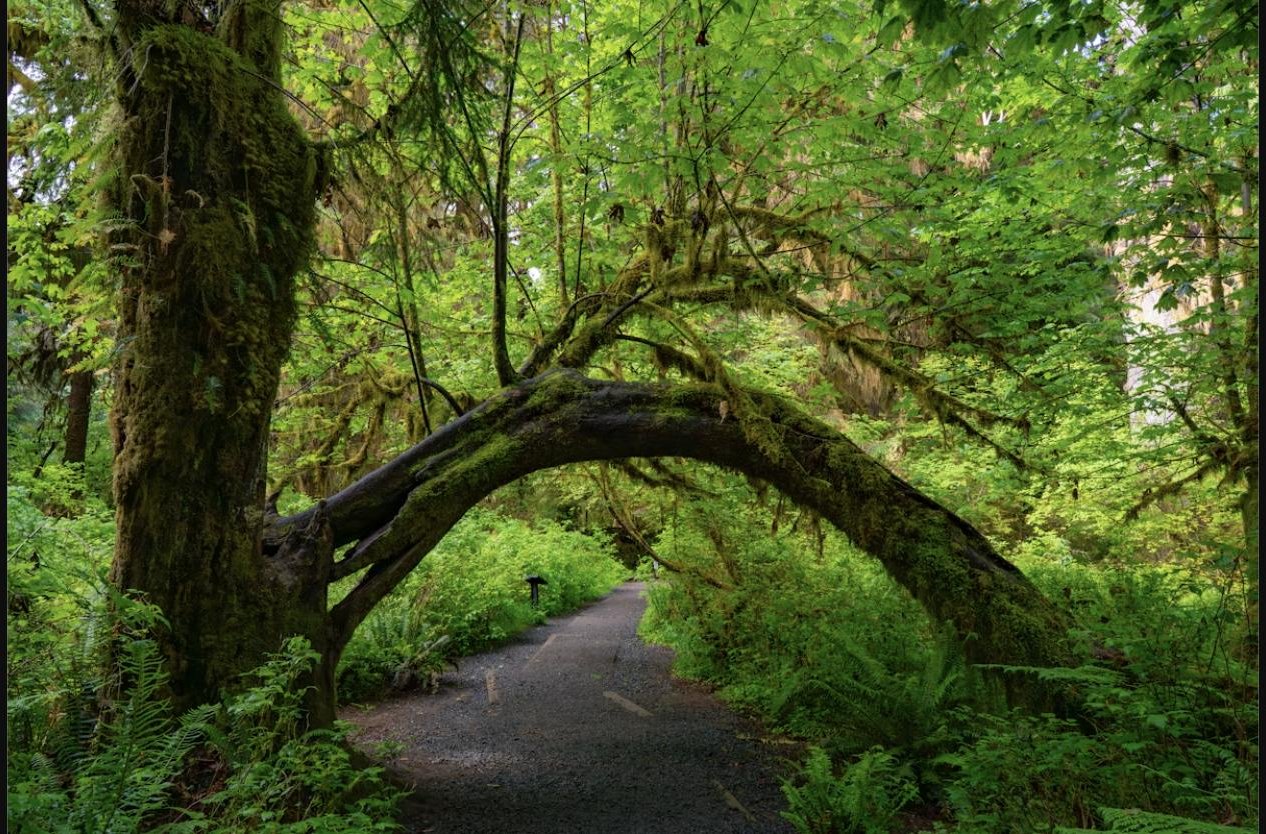
Hoh Rainforest
Reached via the Upper Hoh Road off US-101, the Hoh Rainforest is one of the best examples of temperate rainforest left anywhere, with Sitka spruce and bigleaf maple draped in club moss. The Hall of Mosses and Spruce Nature Trail are short, flat, and suitable for nearly anyone; the Hoh River Trail continues much farther for backpackers heading toward Mount Olympus.
South of Forks
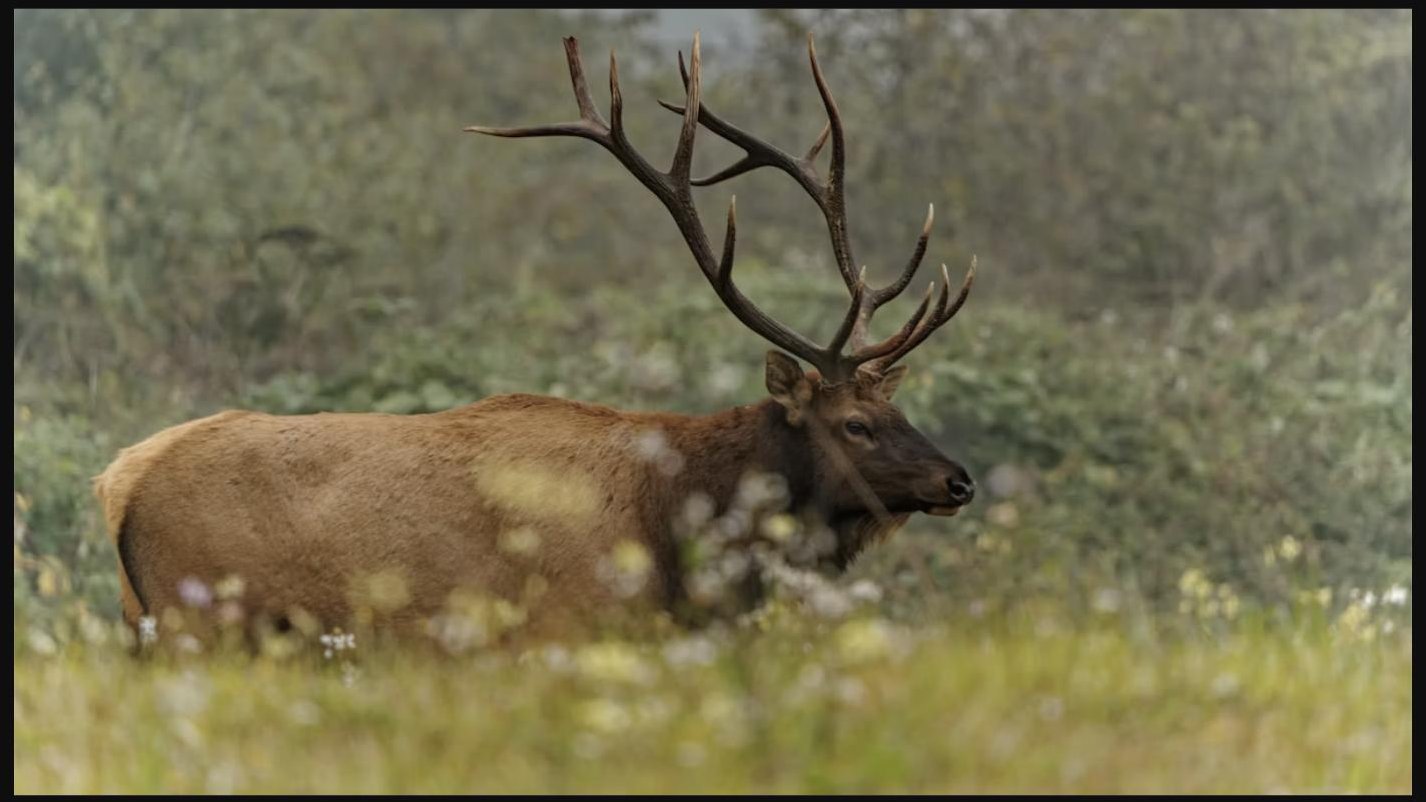
Lake Quinault
A glacially carved lake ringed by old-growth rainforest, with the historic 1926 Lake Quinault Lodge on its shore. The Quinault Loop Drive circles the lake with several short nature trails branching off it. Much of the surrounding land is Quinault Indian Nation territory; respect posted access points and tribal land boundaries.